Mood Tracking for TV Shows
Mood tracking adds emotional context to your watch history so you can see what kinds of stories you actually reach for and respond to.
It is a lightweight layer on top of episode tracking: a simple before-and-after signal that becomes valuable once you look back across weeks, seasons, or genres.
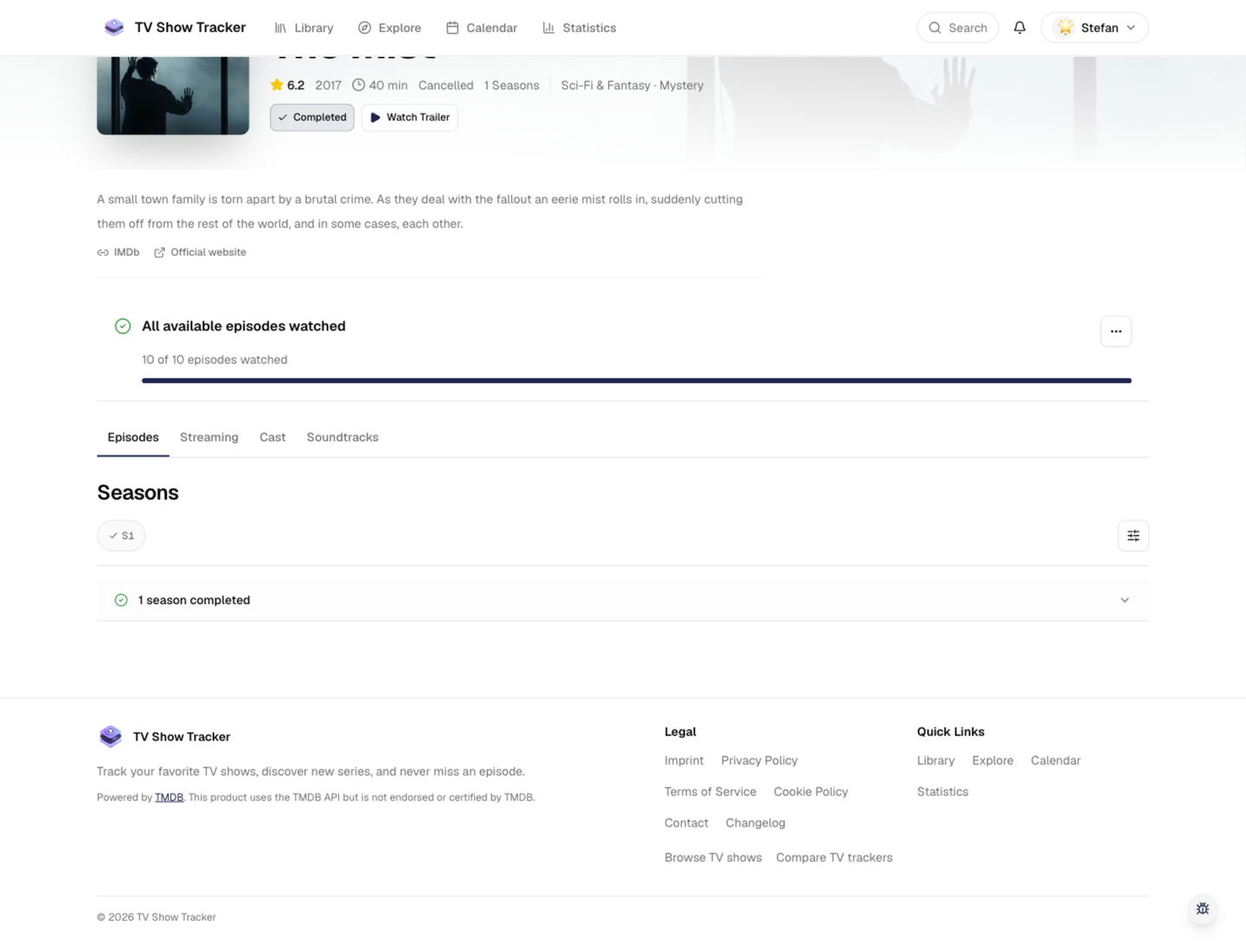
Episode context stays close to the action
Mood tracking belongs in the watch flow, not in a detached survey screen.
What makes it useful
Track anticipation and after-watch mood to spot emotional patterns across shows and seasons.
Track anticipation and after-watch mood separately
That distinction reveals whether a show consistently meets, exceeds, or undercuts the feeling you expected.
Spot emotional viewing patterns across genres
Your comfort-show habits and high-intensity binges start to separate cleanly once mood data exists.
Use mood as a decision signal, not just a diary
Over time it becomes easier to pick what fits your current energy instead of simply picking what is next.
Where it helps in real life
Concrete moments where this feature removes friction, speeds up decisions, or keeps your watching flow organized.
How it works in practice
The exact in-app flow from first action to the result you see afterwards.
Log a quick mood signal when you watch
The flow stays intentionally lightweight so it can become a habit instead of a chore.
Let the history accumulate naturally
A few entries do not matter much, but regular tracking creates a reliable emotional map over time.
Read the pattern back in your stats
Mood becomes useful once it appears next to progress, genre, and activity data.
See it in the app
Real screenshots from the live application so you can evaluate the actual experience before signing up.
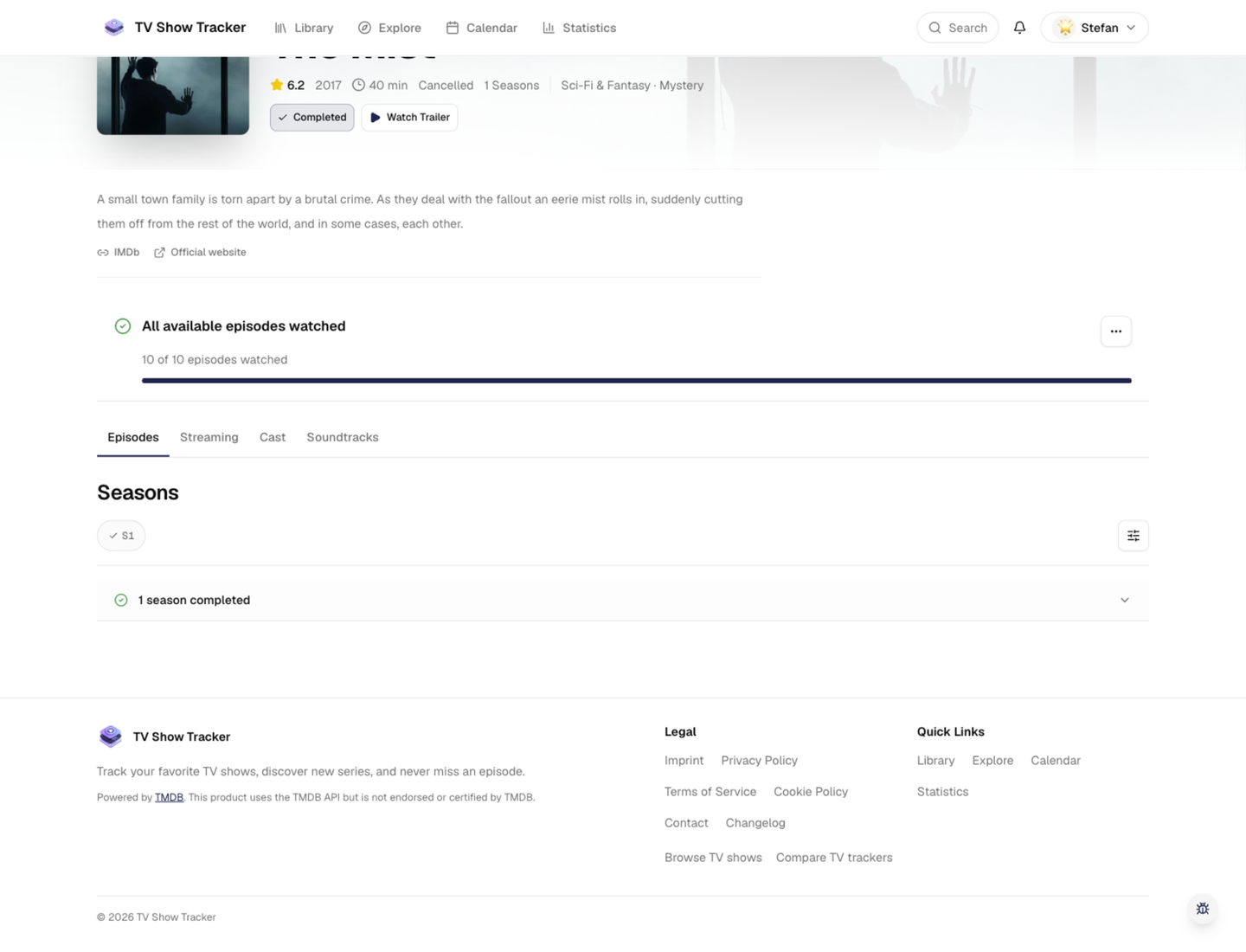
Mood signals become long-term insight
The wider statistics surface helps you connect emotional response with genres, habits, and volume.
Where to find it
Open the exact app areas where this feature becomes part of your daily routine.
Questions people usually ask
Short answers to the things that matter most before you adopt a new workflow.
Everything for watchlists, episodes, and recommendations
Practical tools so you do not have to manage shows in notes, spreadsheets, or half-maintained watchlists.
Track how shows actually feel
Add mood as a lightweight layer and turn simple episode history into something more personal and more useful.